Showing posts with label WHO. Show all posts

Saturday, January 16, 2021

Fly On the Wall | Pandemic over by June!

by Harish Gupta, National Editor, Lokmat Group 

Click here to read in Hindi & Marathi

Pandemic over by June!

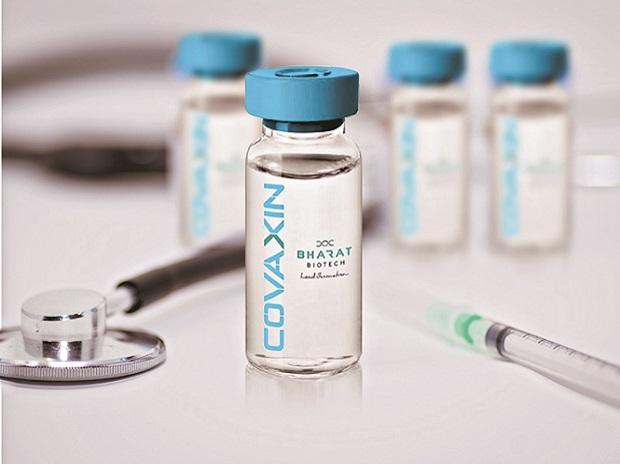
Strange it may sound but true. The Modi government signed the vaccine purchase agreement with the two Covid Vaccine manufacturers (Serum Institute, Pune & Bharat Biotech Ltd, Hyderabad) only at the eleventh hour. It has not signed any agreement with any of the world Pharma companies including Pfizer or Moderna or for that matter with Russia’s Sputnik V. Yet India is set to launch the world's first & largest adult immunization program. Many other nations including the WHO financed billions of dollars for vaccines. But Modi showed his true Gujrati skills and waited till the end when sellers were desperate as they had stock-piled. Modi could do this largely because the pandemic is receding in India and there is no clamour among the people to get vaccinated like in the West. The Covidshield may not have been invented in India, but it is being treated as one because Seerum is supplying to the world. But many leading scientists may have questioned the way BBL’s Covaxin was given emergency clearance by waiving efficacy data. These include immunologists like Ms (Dr) Gagandeep Kang and Dr. Vineeta Bal, Indian Institute of Science Education and Research (IISER), Pune. Even Dr Ganga Khedkar, ex-head of Immunologist department said he won’t take the Covaxin until efficacy data comes. Yet, the going for Modi has been good. Many in the PMO say that India will overcome the pandemic by May-June without vaccinating 80 crore people. He may, perhaps, get rid of his grown up beard then.

How Govt pushed for Covaxin

There is an interesting tale behind the Covaxin. As soon as the pandemic broke out in March, the PMO tossed a question towards ICMR chief Dr Balram Bhargava – Can you develop a vaccine and by when? The ICMR and its battery of scientists & immunologists have been bossing around for decades. But such a question was never posed to them by the PMO. Frankly speaking, the ICMR never invented any vaccine either of its own. Bhargava went back to his 9-member vaccine panel headed by Dr Gangandeep Kang. There was silence of the grave. The PMO was getting restive. One fine morning, Dr Bhargava dissolved the ICMR vaccine panel in early May as the PM constituted the National Task Force on Vaccine directly under him. Dr Kang quit ICMR to go back to Vellore. Modi may not be a scientist but he knew there is enough politics among the scientists too and took the command in his own hand. Within days, the ICMR-Bharat Biotech signed an agreement on vaccines.


Why was Bharat Biotech chosen?

No answers are available till date as to why ICMR chose BBL to make the vaccine. No doubt, ICMR has been working closely with Bharat Biotech and many other Pharma companies for years and has partnered with it for Rotavirus and H1N1 vaccines earlier. No one has a clue till this date of the clauses of agreement between ICMR-BBL. What is known is that the ICMR had transferred the Coronavirus strain isolated at its National Institute of Virology, Pune to BBIL for making the vaccine in May 2020 itself. What is also known is that Dr Bhavgava had created a furor by asking the BBL to produce the Covid vaccine by August 2020. He even issued a terse letter in this regard. The letter surfaced in public domain embarrassing the government as it was felt Modi wanted to make an announcement from the Ramparts of the Red Fort on August 15. The ICMR had to eat crow when BBL couldn't produce the vaccine by August 15. But the Covaxin is ICMR’s baby and all regulators had to fast-track clearances tweaking laid down procedures without Phase-III efficacy data.


Kejri’s Konkani love

Arvind Kejriwal is considered a maverick and is not the one to give up. After his failed 2017 attempts, he has set his eyes on Punjab, Goa, Uttrakhand and UP again going to polls in 2022. In order to gain a toy hold in Goa, he hit upon a novel way and set up Konkani Academy in Delhi. There was no such demand for academy and no one was clamouring for it either. But Kejriwal’s sudden love for Konkani is not missed by rivals in Goa who are poking fun at him. Obviously, the national Capital will see a lot of cultural activities to promote Konkani language and Goan culture. Will it fetch votes for AAP in Goa where Kejriwal had lost deposits in all the seats? You guess!

Thursday, January 14, 2021

Big global demand for Indian Vaccines

  • As Chinese vaccine Efficacy below 50%
  • Covidshield, Covaxin may reap the harvest
Harish Gupta, National Editor, Lokmat Group
New Delhi, Jan 14

With doubts emerging about the efficacy of China’ Coronavirus vaccine, CoronaVac during trials in Brazil & elsewhere, countries are scouting for Indian vaccines now.

With reports surfacing that CoronaVac, manufactured by Beijing-based Sinovac, showed only 50% efficacy, these countries are now knocking at India’s door. India is one of the largest vaccine suppliers.

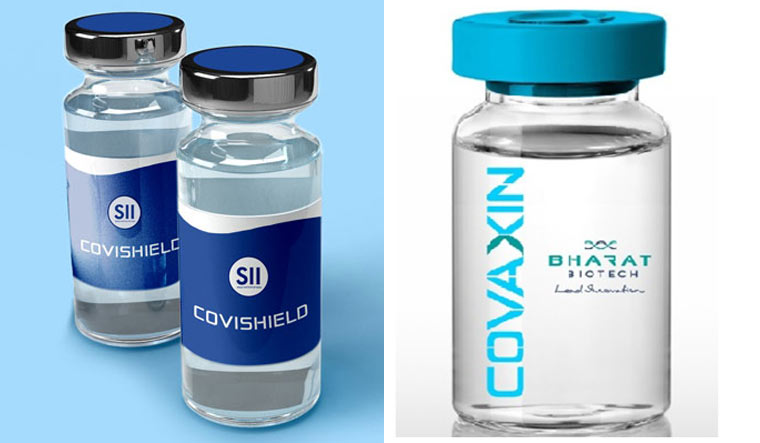
While Seerum had already signed MOUs with Gavi-COVAX under the aegis of the World Health Organization (WHO) to supply up to 400 million doses and Bangladesh , a crisis of sort is erupting in Brazil, Indonesia and ten other countries who were dependent solely upon the Chinese Vaccine.

They had agreed to buy 400 million doses of CoronaVac and now want alternative vaccines too. Bharat Biotech is now in talks with Brazil to supply Covaxin, according to sources.

The Indian Government has given permission in principle to Indian vaccine manufacturers to export after meeting domestic demand. Rather, Prime Minister Narendra Modi is actively involved in the process through members of his task force on vaccine management headed by Dr V K Paul and Ministry of External Affairs.

Seerum has capacity to produce up to 100 million a month and got funding of $300 million from the Bill Gate Melinda Foundation to supply vaccines to GAVI. Bharat Biotech can raise its annual capacity to 200 million a year from the present 100 million.

The government has said Covishield & Covaxin can export to neighbouring countries like Sri Lanka, Maldives, African and South American countries. The shipments will also reach Bhutan, Nepal, Afghanistan and Myanmar at a later stage.

Modi had spoken to leaders of various SAARC nations earlier in this regard. Union Health Secretary Rajesh Bhushan had said last week there was no bar on the export of Covishield or Covaxin but India’s requirements will get the first priority.

Sunday, October 18, 2020

Covid Vaccine by April 2021, say experts

  • Indian Vaccine trials on right track
  • Regulators tough after Remdesivir failure
Harish Gupta, National Editor, Lokmat Group
New Delhi, Oct 17

The hype created by global drug companies notwithstanding, it is emerging that vaccines may not be possible before March-April 2021.

Highly placed sources who are handling vaccine trials in India told Lokmat on the condition of anonymity that trials on three vaccines were at various stages. The Prime Minister who chaired another meeting on Vaccine management today was told that two vaccines are undergoing phase-II trials while one is at phase-III stage.

The Bharat Biotech-ICMR joint venture drug Covaxin and ZydusCadila are at Phase-II stage and their data is yet to be shared with the regulators. The Covaxin trials are going on at 12 locations in India, the ZydusCadila vaccine trials are being done privately and its data has not been shared.

The Seerum-AstraZenca’s Covidshield is at Phase-III stage and the number of vaccine warriors has also been cut short. Yet the final product will take longer than expected. The Sputnik-V from Russia is yet to commence trails though it has been granted permission. The SinoVac Biotech of China had approached the Central Drugs Stan­dard Control Organisation (CDSCO) for trials in India. When CDSCO asked the Chinese to share data, the company never came back.

The Indian regulators are very cautious after the WHO disapproved Remdesivir which was termed as a wonder and after it was sold in 100 countries at a hefty price. Of the 26 vaccines undergoing trials at various stages, only seven are at Phase-III stage which is very crucial.

The regulators have relented on fast-tracking of procedures. But they are unwilling to compromise on the efficacy and safety of the vaccine as its effects are felt after a couple of years.

How the Vaccine is made
It is also disclosed that some of the manufacturers including producers in India are making vaccines by killing the Coronavirus itself to make the product. But they are using different methodology.

Monday, October 5, 2020

Covid Vaccine may cost $5 per dose

India may have to spend Rs 50000 crores on Immunization

Harish Gupta, National Editor, Lokmat Group
New Delhi, Oct 5
India will need Rs 50,000 crores approximately to vaccinate 20-25 crores people during the next one year. This is based on the estimates that one dose of Covid vaccine will be available to India at a price of $4-5 per dose.

The Drug Controller General of India (DCGI) has signaled that Covid vaccine price will be under ₹1,000. Every person will require at least two doses for immunization.

India will require at least 40-50 crores doses. Though India has been assured vaccine supplies by the WHO and Global Vaccine Alliance (GAVI) promoted by the Gates Foundation and Indian vaccine manufacturers and pharma companies. 

This is far less than Rs 80,000 crores indicated by Adar Poonawalla of Seerum Institute of India a few days ago.

India may require at least 5 billion doses of vaccine if it is to immunize 25 crore population. The government is heavily dependent on AstraZeneca by University of Oxford being produced by the Seerum Institute and Bharat Biotech-ICMR joint project undergoing phase-II trials.

However, the Indian government has yet to make an upfront payment to pharma companies like the US, UK, European and other countries have made.

It is learnt that the Prime Minister’s Task Force headed by Dr V K Paul has been holding regular parleys with the global pharma chains researching and undertaking trials and also vaccine manufacturers who are producing vaccines on their behalf. India is a global vaccine hub and has a capacity of manufacturing two billion doses a year. These companies can ramp up production provided the government gives them facilities and funds.

The WHO has urged wealthier member states to join its Covid-19 vaccine, Covaxin, to ensure the equitable global distribution by end 2021. Gavi, the Global Alliance vaccine backed by the Gates Foundation, has raised $8.8 billion from world leaders and companies. The Bill & Melinda Gates Foundation pledged $1.6 billion.

Tuesday, August 11, 2020

PM Task Force Scouts for Covid Vaccine as Russia set to hit the market

Harish Gupta, National Editor, Lokmat Group
New Delhi, Aug 10
India is scouting on a war footing basis to obtain Covid vaccine as many leading global companies have gone into phase 3 trials. The Russian University has signaled to register its wonder drug early next week and go into mass production.

The Prime Minister’s Task Force on Vaccine procurement & management headed by Dr V K Paul is keeping a close watch on vaccines being tested by global players like Oxford, Cansino and Pfizer which have gone into phase-3 trials. With Indian vaccine trials still at an early stage, the PM’s Task Force is exploring alternative sources to procure vaccines from global sources.

According to WHO at least 165 vaccines for Coronavirus were being developed and 23 of them are in human trials including two drugs being tested in India. These drugs are still a far cry. 

Official sources, however, concede that India will have some difficulty as it has not made advance payments or invested in research & development of vaccines in any global company like many rich nations.

These sources insist “some grants have been made available from the department of biotechnology.” But these are meager amounts.

The Task Force is banking on the Bill Gates Milinda Foundation and also on Covax (Covid-19 Vaccine Global Access) in which some Indian companies and Bill and Melinda Gates Foundation have partnered. It is expected that this alliance (Gavi) will supply vaccines to low- and medium-income countries. The WHO’s Somumya Swaminathan has been on record that countries could go in for bilateral deals and it is for them to take the risk.

The Indian Council of Medical Research (ICMR) recently said in an official statement that the Covid vaccine be Made available to the health workers first. But a lot of efforts will be needed as demand for the covid vaccine will be huge as and when it hits the market.

At least one manufacturer of the vaccine in India told Lokmat on the condition of anonymity said that the government had not initiated any discussion with it on procurement of vaccines. India has the capability to produce two billion doses of vaccine.

Thursday, December 17, 2015

The odd man out

by Harish Gupta, National Editor, Lokmat Group


The NDA government was elected to office last year sailing on a slogan as promising as sab ka saath, sab ka vikas. The embarrassing fact is that, despite Prime Minister Narendra Modi's jet-setting foreign schedules and his skill at selling dreams (or may be schemes), like bullet trains, the economy has not shown signs of recovery as yet. Ironically, most of Modi's ministers are proving unexpectedly inept, incompetent and arrogant. A group of motor-mouth ministers is enough to do the rest.The Congress under the Gandhi family is anything but a responsible Opposition. The National Herald case, which indeed carries the first whiff of a corruption scandal against the family, is being resisted by the party with an unprecedented rancour, as if it is blasphemy.

While people are coming to terms with putting it down to fate, the biggest surprise came last week from the most unexpected quarters. While Delhi's politicians were fighting their selfish battles, the city became inhabitable due to two reasons: its poor air quality, and congestion of its roads due to unchecked growth of vehicular population. Delhi's air is declared by the WHO as the worst in the world, with denser concentration of tiny particles than Beijing, the worst offender till recently. The tiny particulate matters invade the alveoli of the lungs, which are the tiny pulmonary chambers in which blood receives oxygen from the air we breathe. Delhi chief minister Arvind Kejriwal jolted the conscience of the city when he tweeted a picture released by eminent heart surgeon Naresh Trehan showing the ominously sooty profiles of lungs of two residents of the city, one of them a child and the other a 55-year-old. Tragically, they were equally rotten.

But tiny particles have rustic origin, like burning of post-harvest plants. Automobiles, on the other hand, are killer emitters of carbon dioxide, the main culprit for global warming, apart from poisonous carbon monoxide and the nitrous oxides that diesel engines emit. Delhi has India's largest vehicular population, about 7.6 million (2012) including 2.2 million passenger cars (the rest are mostly two-wheelers). These numbers are in excess of the combined number of vehicles in Chennai, Bengaluru and Mumbai, the next three cities with high vehicular population. Though Delhi has the largest road length (30,000 kilometres), every square inch of its surface is occupied by standing cars during office hours on the working days. In fact driving in Delhi is a serious menace to health. Bumper-to-bumper traffic movement is multiplying drivers' cardiac problems. Besides, usually driving on the lower gears, the city's cars, most of which have diesel engines, emit more noxious gases than a couple of super thermal power plants.

Kejriwal, as a politician, is considered light-weight, who has a powerful electoral base in Delhi, and increasingly in Punjab, but leaders of the big parties are usually envious and contemptuous of him. He sprang a surprise on them with the announcement of a dramatic plan to ration road space by allowing cars with odd and even numbers as last digits on their licence plates on alternate days. To be launched from the first day of 2016, the plan will serve as a pilot project for 15 days. Thereafter, learning lessons from the experience, the road rationing plan may be fine-tuned to give it a permanent shape.

The idea is neither novel nor fool-proof. In Paris, where it began, it had to be abandoned for a combination of reasons, one of them being the readiness of Parisians to flaunt a second car when the first car's number does not match the date. Delhiites too have the same spirit and the Kejriwal formula may finally end up enriching automobile makers' pocket, without seriously denting the crowding of cars on roads. In fact it may cause traffic to grow. Besides, sifting from the flow of cars the CNG cars, and those in the exempted categories (carrying patients, or being driven by women alone), may invite a 'police raj' on streets on an unprecedented scale. It could have been a better idea, perhaps, to follow the London model in Delhi. In London, a standard congestion charge of 11.5 pounds is levied on each car entering central London between 7 am and 8 pm.

About 54 per cent of Londoner households have at least one car (in Delhi it is very much less), but congestion charge is one reason why they leave car at home, often for the homemaker wife to do shopping at the nearby Tesco. There are still many who cannot but take the car into the inner city. Their money, about two billion pounds (` 20,000 crore) a year, has given London a world class public transport system - an underground-overground metro which makes news when it fails or falters, and a bus service so punctual that passengers at bus stops set their watch by their arrival timings.

The Kejriwal formula falls short as it fails to show a way of generating revenue to expand Delhi's public transportation infrastructure. With a length of only 185 kil a The Kejriwal formula may end up enriching automobile makers' pocket, without seriously denting the crowding of cars on roads. Besides, sifting from the flow of cars the CNG cars, and those in the exempted categories may invite a 'police raj' on streets. on an unprecedented scale. It could have been a better idea, perhaps, to follow the London model in Delhi. In London, a standard congestion charge of 11.5 pounds is levied on each car entering central London between 7 am and 8 pm.

About 54 per cent of Londoner households have at least one car (in Delhi it is very much less), but congestion charge is one reason why they leave car at home, often for the homemaker wife to do shopping at the nearby Tesco. There are still many who cannot but take the car into the inner city. Their money, about two billion pounds (Rs 20,000 crore) a year, has given London a world class public transport system—an underground-overground metro which makes news when it fails or falters, and a bus service so punctual that passengers at bus stops set their watch by their arrival timings.

The Kejriwal formula falls short as it fails to show a way of generating revenue to expand Delhi’s public transportation infrastructure. With a length of only 185 kilometeres, the Delhi metro is woefully short of giving citizens a substantially enhanced mobility. It costs a king’s ransom to add a single kilometre to it. The 6000 new buses to be added to DTC fleet each one costing Rs 85 lakh along with 20000 auto-rickshaws and 10000 taxis will surely add to more chaos.

But what could Kejriwal do under the circumstances? If he were to generate revenue for public transportation, there could be opposition from powerful quarters. A new restriction on diesel cars may be enforced by Supreme Court but it is too big an issue. However, Kejriwal, despite his limitations, has taken a gigantic step. He dares to take risk and knows the pulse of the people. His steps are hailed by the poor and the rich find it difficult to criticize either. He knows how to hog the limelight and steal the thunder in the midst of big battle being fought between the BJP and the Congress.