Showing posts with label Mumbai. Show all posts

Saturday, April 3, 2021

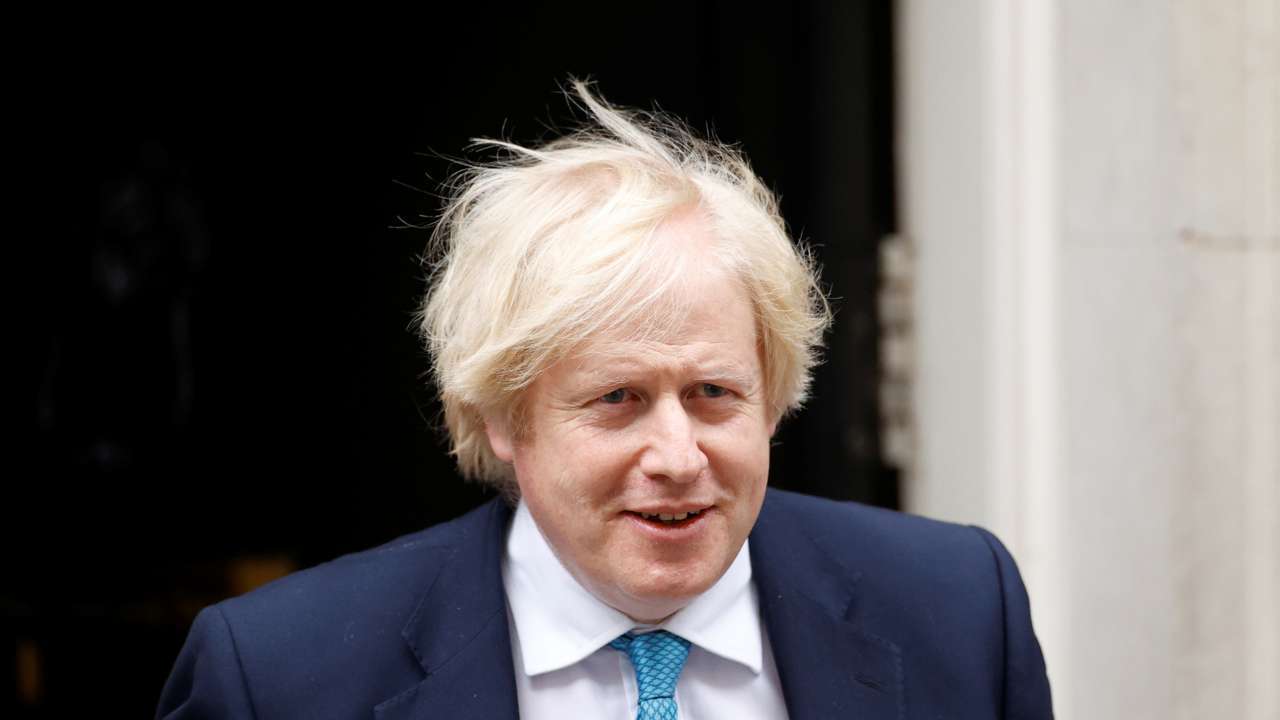
Boris Johnson’s Pune, Mumbai trip in jeopardy

British PM is to visit two cities April end 

by Harish Gupta, National Editor, Lokmat 
New Delhi, April 2

Maharashtra's alarming Covid-19 situation and high positivist rate of more than 14% has put British Prime Minister Boris Johnson's visit to Pune & Mumbai in jeopardy.

Johnson is slated to visit New Delhi sometime on April 26-27 and as part of his itinerary was contemplating visiting Pune, Mumbai etc.

Johnson is eager to visit Pune which is the world's largest vaccine manufacture facility, Serum Institute of India (SII). SII has been producing Oxford Astrazeneca's vaccine Covishield, which has been exported to many countries from there. British officials are struggling to take a call on Pune visit and in touch with Indian counterparts.

This is the second time the British Prime Minister is contemplating visiting India. He was to be country's Chief Guest during the Republic Day celebrations on January 26. But Britain was hit hard by another Covid wave and lockdown was declared forcing cancellation of his trip.

The April trip was finalised when the situation started improving in the UK and it looked as if the second wave won't hit India. However, Maharashtra is among the worst hit among eight states. As if this was enough, Pune and Mumbai top the list of districts in highest reported cases. A night Curfew has been imposed in Pune from today and the situation continues to be alarming in Mumbai too.

The cases have risen at a rapid speed in Maharashtra from 15000 or so on March 15 and have trebled in less in 17 days. Though the state tops the country in terms of vaccination.

UK as the chair of the G7 grouping has invited India for the meeting of the grouping in June. Indian PM Modi will be traveling to the country for the summit, which could see its first in-person quad meeting as well. Both sides are also working on a trade deal.

Sunday, October 11, 2020

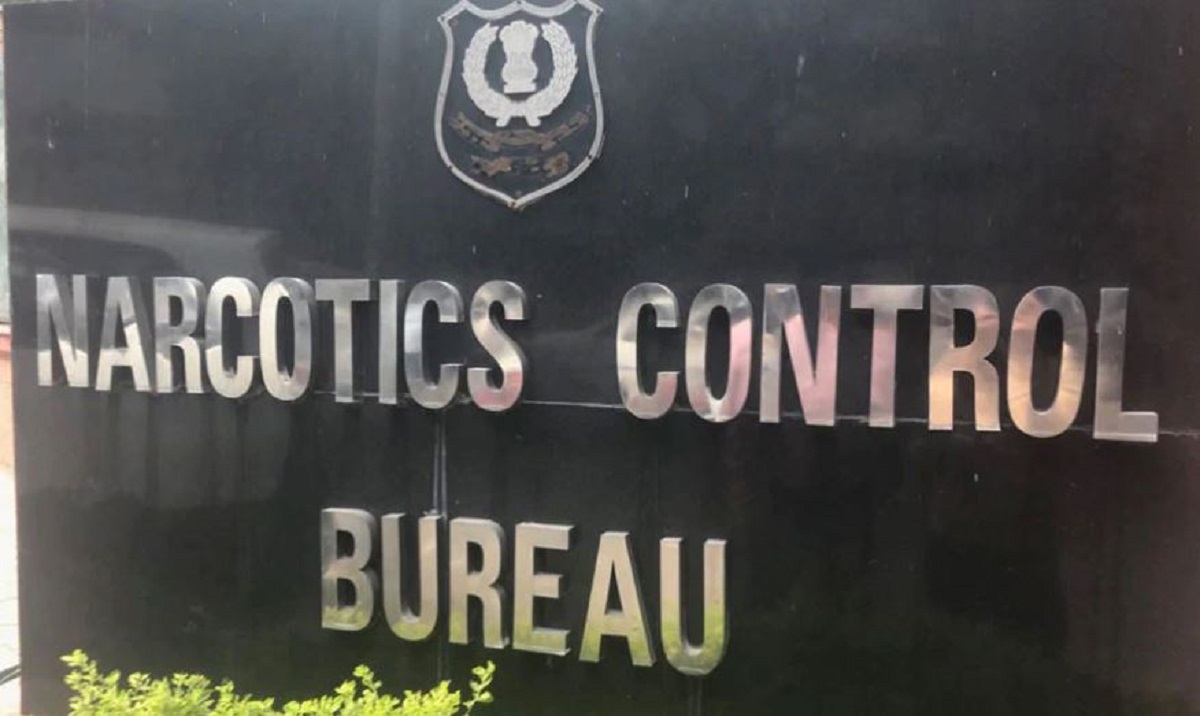
Centre steps in to check NCB

  • Go after drug syndicates, peddlers, not consumers
  • Film stars may have a sigh of relief, for Now!
by Harish Gupta, National Editor, Lokmat Group
New Delhi, Oct 10
The Narcotics Control Bureau (NCB) is understood to have been cautioned in the infamous Mumbai Drug case to go after the peddlers and drug syndicates rather than film stars. The NCB officials were quoted by several TV channels last week several big names of film industry will be called for questioning. The NCB officials did not deny these reports creating a panic. The NCB had arrested more than a dozen persons including Rhea Chakraborty and some associates of late actor Sushant Singh Rajput who was found hanging in June last.

It now transpires that the Union Home Ministry has cautioned the NCB to exercise extreme caution and it should go after drug syndicates and peddlers. But individual consumers should not be harassed if they are not part of the "drug syndicate".

If sources in the Union Home Ministry are to be believed, it had only directed that the SSR case be handed over to the CBI for probe instead of Mumbai Police. Even the Enforcement Directorate was roped in the probe. But it was never the case that innocents be harassed. The CBI Director R K Shukla, on his part did not play the role of an "over-enthusiastic" officer.

Even the AIIMS Forensic team headed by Dr.Sudhir Gupta ruled out the possibility of death by strangulation. Later, the ED also conveyed to the government no case of money laundering has been made out.

Meanwhile several representations, personal and written, were made to the Prime Minister's Office and Home Ministry that everything should not be seen with the political prism. Many in the BJP also told the leadership that dragging the drug consumption case to a battery of film stars will not give any political mileage to the party.

It is learnt that the NCB has now been told to focus on drug syndicate and big operators involved in the smuggling and those helping in it. The NCB has been told not to abandon the probe but to put the probe in the "slow lane."

Thursday, August 27, 2020

Worried Pawar deputes Patel on Congress crisis

Harish Gupta, National Editor, Lokmat Group

New Delhi, Aug 26

NCP supremo Sharad Pawar is extremely worried over the internal crisis developing in the Congress Party. Since the Congress is the catalyst for the unity among the Opposition parties in the country, any weakening at this juncture will have a direct bearing on the stability of many Opposition ruled states.

It was primarily because of this very reason that he deputed his Man-Friday and NCP general secretary Praful Patel to keep a close watch on the development and get an update at the earliest. It was perhaps because of this very reason that Praful Patel rushed here from Mumbai yesterday and is camping here.

When contacted, Praful Patel told Lokmat, “We have no role in the internal affairs of the Congress. Of course, it’s a matter of concern as we are running a government in Maharashtra in alliance with Congress and any such development may have a bearing.” When asked if he had talked to Congress leaders, he smiled and said, “We talk to everybody on a daily basis. We want Congress to be strengthened and become a strong party so that the Maharashtra experiment can be taken at the national level.” However, he declined to say anything on the issue and also clarified that the main purpose of his visit here was to attend the meeting of the Standing Committee of Parliament on Finance. 

If sources are to be believed, many top Congress leaders were talking to Praful Patel on a daily basis. The NCP sees an opportunity in the Congress if there is another split in the party as it happened in 1999. “Any such development will prove the point Sharad Pawar has been making for a long time that Rahul Gandhi is not capable of leading the Congress,” said another senior NCP leader on the condition of anonymity. Patel is understood to have briefed Pawar on the internal crisis which has been pushed under the carpet for now.

Friday, November 9, 2018

Tension mounts between RBI & Govt.: Hasmukh Adhia as RBI Governor ?

by Harish Gupta, National Editor, Lokmat Group

Tension mounts between RBI & Govt.
Hasmukh Adhia as RBI Governor ?


Harish Gupta

New Delhi, Nov. 8
As the tensions between the central bank and the Modi government refusing to ease, there is considerable speculation that the South Block is ready with a contigency plan in the event of RBI governor Urjit Patel putting in his papers.

Though RBI Governor Urjit Patel is on record to say that all issues will be discussed at the RBI board's meet in Mumbai on November 19, controversies refusing to die. Ut got a fillip when a leading newspaper reported that the Finance Ministry wants the RBI to part with over Rs 3 lakh crores in dividend. This is a record any government has sought from the RBI and has added fuel to the fire. The government and the RBI have not denied the report. Normally, the RBI has been giving dividend to the government to the tune of Rs 25000-30000 crores every year. But the Finance Ministry wants this amount to recapitalize the public sector banks who are facing a huge cash crunch. The government has already come out with a plan to fund these bank with Rs two lakh crores. But it is facing acute cash shortage due to surge in demand from the NFBCs, infrastructure sector and bank recapitalization.

Urjit Patel has maintained a studied silence despite provocative statements being made by some non-official and part-time members of the RBI Board. But Urjit Patel has sent a clear signal that he is a tough guy and unlikely to relent when comes to the independence of the RBI. The prospects of Patel resigning had receded as some sort of truce has been achieved. But after non-official member S Gurumurthy blasted the RBI and Economic Affairs Secretary Subhash garg attacked Viral Acharya, RBI Deputy governor, the war may escalate further. Garg attacked Acharya and mocked him asking him where is “Wrath of the Markets?”. Acharya had said if the government interfere, it will have to bear the wrath of the markets. The government is demanding that RBI relax norms for loans to power sector and relaxing norms for SMEs. Urjit Patel was in no mood to do so. The board of RBI was unwilling to relent also.

Highly placed sources say that the government is fed up with professionals who are not aware of the ground realities of the economy; be it Raghuram Rajen or Urjit Patel. It will now have bureaucrats as next RBI governor. It is in this regard that the name of Hasmukh Adhia is being mentioned.

He is retiring on November 26 this year. At one point, he was tipped to be cabinet secretary. But Modi decided to give extension to incumbent P K Sinha for a year. Adhia is from the Gujarat cadre and said to be one of Modi’s handpicked and trusted officials. Many in the bureaucracy believe that the government would like to retain his services in an important capacity after he retires. In the event of Urjit Patel choosing to stay put, Adhia may also be given an extension until the next General Election.


Ends

Tuesday, October 4, 2016

A surgery long overdue

by Harish Gupta, National Editor, Lokmat Group


By giving a nod to a swift and target-based military retaliation in the early morning of September 28, Prime Minister Naraendra Modi has turned inside out India's long-established set of responses to provocations from Pakistan. The upending of the familiar Indian strategy is even more pronounced by India taking the initiative in declaring the authorship of the "surgical strike" on the terrorists' staging camps. The Indian Special Forces also inflicted "huge casualties" including killing "two Pakistani soldiers" who had come to the terrorists' rescue. If there were low-key line-of-control crossing episodes in the past, India never went public. Whether it was Operation Parakram in 2002 or India retaliating to the beheading of the soldier in 2013, the government never claimed that its forces crossed the LoC. India always treated armed reprisal as the last resort. It waited for 24 years till 1998 to turn its tested nuclear capability into a weapons programme. In 2008, following the most daring attack in Mumbai by Pakistan Army's proxies, resulting in the loss of 164 lives, public outcry for a retaliatory attack on Pakistan was at its shrillest pitch. Yet India did not budge from its commitment to "strategic restraint".

That Modi has finally moved away from that doctrine is consistent with his pre-election commitment of giving a "fitting reply" to Pakistan. Following terrorist attacks in Gurudaspur, Pathankot and finally Uri, failure to live up to his promise would have haunted him like albatross around his neck. It was a risk he could ill-afford, with the manufacturing struggling to pick up, unemployment haunting and elections to Uttar Pradesh, Uttarakhand, Punjab, Goa & Manipur round the corner. His Man-Friday and BJP president Amit Shah is a hawk and played a key role in formulating political decision making. Even beyond electoral politics, inaction after the Uri attack would have put at stake his identity as someone "different" from the Nehruvian "peaceniks". His rating as a man of iron would have fallen even below that of his predecessor from BJP, Atal Bihari Vajpayee, who, despite his reputed fondness for 'biriyani diplomacy' with Pakistan, had actually fought a costly and difficult war with it on the peaks and slopes of Kargil in 1999.

That Modi would choose the tough path was evident from his choice of Ajit Doval as his National Security Advisor. Doval is the bureaucratic architect of the current policy shift from strategic restraint to "offensive defence'. As early as October 2014, he summoned the BSF chief and advised him to respond to cross-border firing from Pakistan with "higher than proportionate" intensity. The BSF was also advised by Doval to desist from holding the usual flag meetings with Pakistan Rangers after such incidents. The policy shift began paying dividends in an indirect but purposeful way, by boosting morale of the armed forces after a decade of despondency and despair caused by the regular cycle of aggression from the Pakistan side and mere hot words from Indian politicians. The September 29 surgical strike by Indian Special Forces should be seen in this context. India desperately needed to come out of morass of helplessness against a bullying neighbour, and its territory being used, in the words of one of our diplomats in the UN, Eenam Gambhir, as the "Ivy Leagure of terrorism". In the past, such forceful phrases would have sounded hollow without any concrete action on the ground. But, after the 29 September reprisal, our DGMO was the first to declare that our forces had indeed penetrated inside PoK territory to carry out attacks. India was at last walking the talk. 

Pakistan has so far refused to accept the incident, or its nature, brushing it aside as just another cross-border episode. But such reticence may be a ruse to buy time and collect strategic thoughts to deal with a more determined India which is no longer shy to step on the escalation ladder. It now seems that Prime Minister Modi and his security team led by Doval have seen through Pakistan's decades-long practice of military and nuclear blackmail, and they have decided to call the bluff. Though the flow of bluster from Pakistan is as usual—and India is battle-ready with strike forces and other units fully mobilized—the civil leaders of the neighbouring nation, and their military bosses, are certainly finding severe limits on their choices. The Indian action has shown that Pakistan cannot hide behind its plea that the terrorists on the prowl are "non-state actors", so it must remain prepared for full-scale military retribution for every mischief committed by the UN-designated terror groups it trains, arms and harbours. As a strategic expert in Delhi was explaining to me, "the next Mumbai attack from Pakistan may trigger a combined naval and air attack on Karachi on an epic scale".

The source of Pakistan’s confidence so far is two-fold: first, the belief that China, its “iron brother”, will do all it takes on India’s northern and eastern frontiers to force India to scale down; and the US will exercise its influence to de-escalate the confrontation before it reaches the nuclear ignition point. However, Pakistan’s recent lessons from responses from Beijing and Washington are disappointing. China, on its part, did not go beyond expressing concern about the confrontation and said “both nations should exercise restraint”. The US pinpointed the Uri terrorist attack as the “cause of escalation” and reiterated that Pakistan must de-legitimise the UN-designated terror outfits. Besides, Pakistan found itself bereft of friends in South Asia as it was compelled to cancel the scheduled November SAARC summit in Islamabad following unequivocal condemnation of terror by Afghanistan, Bangladesh, Bhutan and Sri Lanka.

Modi is inarguably a controversial leader, but, in the third year of his rule, his diplomatic and military gambits are paying off. Except an electorally defunct CPI(M) and politicians like Mamata Banerjee and Lalu Yadav, wedded to minority vote bank, every opposition leader, including Congress president Sonia Gandhi and Rahul Gandhi, complimented Modi for his bold move.


Monday, May 2, 2016

Water train to nowhere

by Harish Gupta, National Editor, Lokmat Group

The water-starved Latur district of Maharashtra's Marathwada region is now witnessing the frightening sight of armed guards patrolling along its water reservoirs, where assembly of more than five persons has been banned. With an unrelenting summer leaving most parts of India baked to bone, it is no more an unbelievable sight that water lorries are piling up in all sorts of unthought-of places: Usha Kiran Building, on Mumbai's Carmichael Road, its toniest patch, where the late Dhirubhai Ambani lived with his family for many years; Subhadra, at Worli, which houses, among others, BJP minister Nitin Gadkari and NCP heavyweight Ajit Pawar; not to speak of the chrome-and-steel skyscrapers in proud Gurgaon, the Millenium City in Delhi's outskirts which will come to a standstill without the water tankers.

Tuesday, January 19, 2016

Start up & stand up

by Harish Gupta, National Editor, Lokmat Group


Living in India and being exposed to the Indian media, it is difficult to win over the cynicism that has become an integral part of the Indian psyche. The country has improved beyond recognition in the last two decades or so. The share of people living below $1.25 a day was nearly a half (49.4%) in 1994; it is about a quarter (24.7%) in 2011 and is supposedly around 23% now. Between 2005 and 2014, the prevalence of underweight children under the age of five fell from 43.5% to 30.7%. The trend-line is therefore towards optimism, but the urban middle class, from where opinions filter down, is not much swayed by statistics. It is the poor growth of jobs since 2011 that turned Narendra Modi's election into a tornado, running the Congress ship aground. But 20 months in power, Modi and his NDA government is still battling with poor industrial production, steeply falling labour-intensity of farming and negligible job growth. No wonder, therefore, that the Congress' new boss, vice president Rahul Gandhi, is out on the road in style, as he did last week in Mumbai. As he marched from Bandra to Dharavi, many young men and women disappointed with Modi government walked with him.

As some of the figures of poverty alleviation cited above will show, India hasn't done badly in the recent years. But a few epochal changes have taken place in global economy that have turned some old Indian notions on their head, one of these being that industry still has the potential to employ many workers. Both industry and agriculture need much fewer hands these days. But one million workers are joining the work force each month. It is an existential problem. Traditional industry cannot expand (and thus pick up new jobseekers) because firms are hugely debt-laden, with total corporate debt being seven times the companies' net profit. It is clear that the conventional narrative of industrial growth and job creation must change.

Interestingly, Modi is the first to begin scouting for a solution out of the box, in promoting start-ups. In his Independence Day speech last year, he promised to launch Start-Up India, a campaign to remove all obstructions for entrepreneurship to blossom. Last Saturday, he presided over a day-long programme at Delhi's Vigyan Bhavan for which the motto was 'start up India, stand up India' and the guests included, apart from many Indian entrepreneurs, about 50 of their counterparts from Silicon Valley. Modi shared the dais with Uber founder Travis Kalanick and CEO of Japan's Softbank Masayoshi Son. Modi was at his sarcastic best when he declared the state's arms-length policy to start-ups. " We have done a lot (of controlling industry) for 70 years. Where have we reached?"

Start-ups were visible for a decade but it is picking up speed now, the number going up from a mere 501 in 2010 to 4,500 last year. Start-ups like Flipkart, Snapdeal, Paytm or OLX employ thousands of workers who work not only on their computer desks but are engaged in delivery and other logistic functions. Softbank is going big on solar and wind power. Modi spoke of new start-ups that he'd like to see in education and health sectors. At present, about 90 per cent of start-up finance comes from abroad. The government has now laid before the young dreamers a Rs. 10,000-crore 'fund of funds' (last resort financier) and Rs 2,500 crore credit guarantee fund. Son has in an interview spoken about $10 billion funding of Indian start-ups.

As records go, about 90 per cent of start-ups nearing success invariably migrate to the US or other Western countries because of India's multiple problems, notably high taxation. Modi has announced a three-year tax exemption for start-ups and other benefits. It is good news for scions of the owners of thousands of failed industries who want to move on. He said there would be easier exit with the proposed new bankruptcy laws and, impishly, suggested that the entrepreneurs lobby with India's opposition leaders to facilitate early passage of these laws.

The Modi administration has often been criticised for betraying a lack of original thinking. In December, the Prime Minister headed a meeting of 80 senior bureaucrats and sought to pick their brain for new ideas. The exercise was mostly one-sided. 'Digital India', which too has Modi's imprimatur, is still iffy because of low availability of wireless frequency which pushed up the cost of wi-fi which, in its turn, has kept fully loaded smart-phones beyond ordinary people's reach. Swachh Bharat, the cleanliness mission, had the potential to be a magnet for unskilled and semi-skilled jobs, but its employment success calls for state governments' cooperation which Modi hasn't been fortunate to get. The Ganga Action mission too is lost in sand.

Modi's start-up experiment is a bright spot on India's political 
terrain which is unfortunately greying up all too soon with 
leaders who have reduced their objective to winning elections at any rate.

Shifting gear to Start-Up, Modi is clearly moving to a safe zone without political opposition. Interestingly, Rahul Gandhi is twenty years younger than Modi but his politics so far is focused on bitter opposition to Modi, as if he is a usurper, but he has shown no vision of where the country’s young adults will be employed. “ To have start-ups”, he said in his speech in Mumbai on the day Modi was spending with entrepreneurs, “one needs a society without intolerance”. The observation is particularly jejune in the context of India’s critical employment crisis and the jobless growth that began when Rahul’s own party was in power.

Modi’s start-up experiment is a bright spot on India’s political terrain which is unfortunately graying up all too soon with leaders who have reduced their objective to winning elections at any rate. Thinking of larger issues is alien to them. Delhi Chief Minister Arvind Kejriwal of AAP has nursed a “thinker” image, his masterstroke being the plan to reduce cars on Delhi roads by allowing odd numbers in one day and even numbers the next day. But the plan was only for 15 days, so the problem will be back soon though it did not go in the first 15 days either. As Kejriwal’s ambitious start-up, it is not sustainable 24x7. But Modi is seeking a lasting solution to the problem of unemployment.